What To Expect on Move-In Day at a Self Storage Facility
What To Expect on Move-In Day at a Self Storage Facility
Move-in day at a self storage facility is one of those experiences that goes smoothly when you know what to expect, and becomes a scramble when you don't. Whether you're storing furniture between homes, clearing out a garage, or managing overflow from a small business, your first day at a new unit sets the tone for everything that follows. A little preparation goes a long way toward making the process efficient, organized, and stress-free.
For first-timers renting a storage unit, the process can feel unfamiliar. What documents do you need? What happens at check-in? How do you load your unit so you're not digging through boxes every time you return? These are the kinds of questions we'll answer step by step, with practical advice drawn from the move-in experience at well-run facilities across Southern California, including the Inland Empire and Orange County.
From what to pack in your move-in kit to the right questions to ask staff, here's everything you need to know before you pull up to that unit door.
What To Bring and How To Prepare Before You Arrive
Preparation before move-in day is just as important as the move itself. Before heading to the facility, gather three essentials: your signed lease agreement, a government-issued ID, and your payment method. Most fully gated storage facilities require these at check-in, and arriving without them can delay the entire process.
- Pack a move-in kit: Bring a sturdy padlock and ask staff in advance which lock types are compatible with your unit's door hardware. Add packing tape, markers for labeling, and a hand truck or moving dolly if the facility doesn't provide one on-site.
- Measure before you load: Confirm your unit's dimensions ahead of time and measure large furniture and appliances against those numbers. A sofa that barely fits a doorway at home may need to be angled differently in a storage unit.
- Dress for the work: Wear closed-toe shoes and bring water. Move-in day is more physical than most renters expect, especially when loading drive-up storage units where you're working in open air.
- Confirm climate-control details: If you reserved a temperature-controlled unit, contact the facility in advance to understand the consistent temperature range it maintains. This helps you prioritize which items go inside first, like electronics, wood furniture, and artwork.
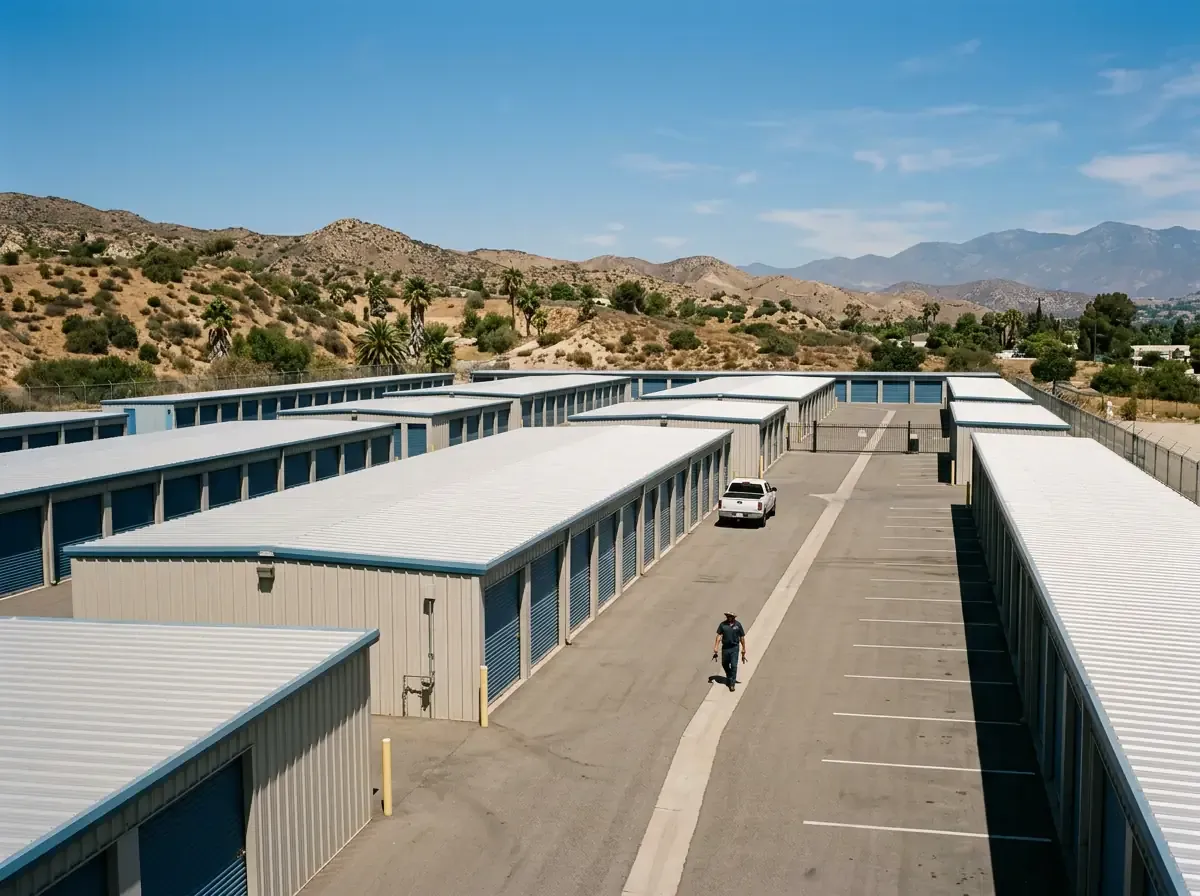
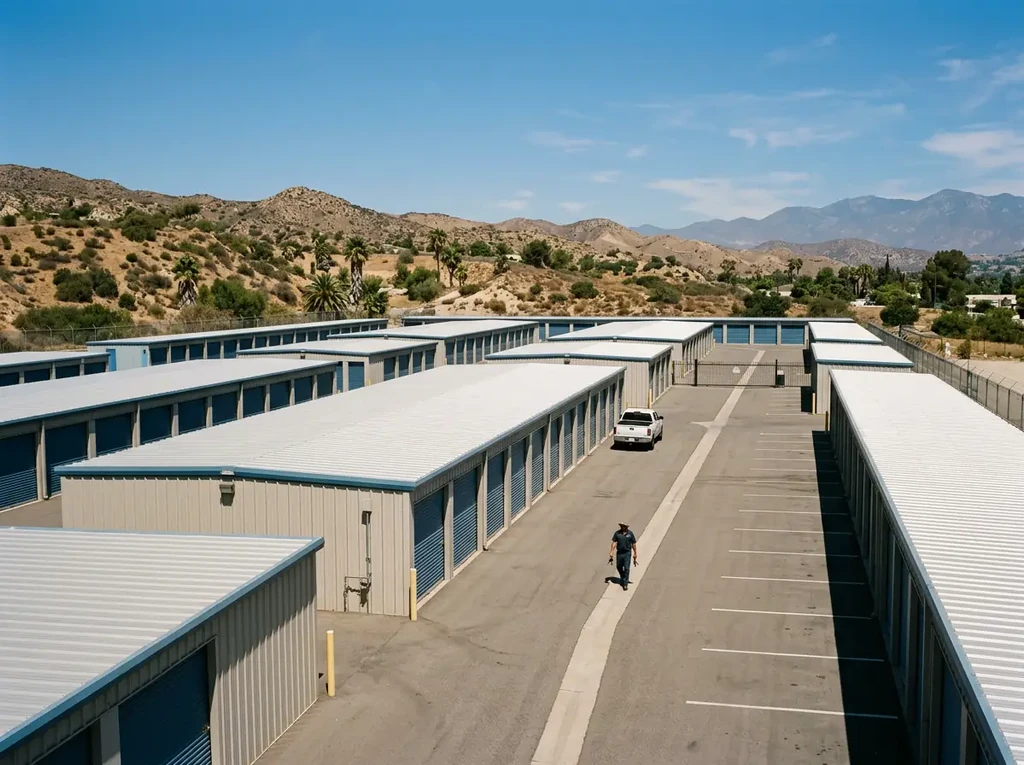
A sun-baked self storage facility under a bright blue California sky on a sweltering summer day.
How the Check-In Process Works at a Self Storage Facility
Most facilities walk first-time renters through a brief orientation on arrival. At our locations across the Inland Empire and Orange County, this typically covers your gated access control code, facility hours, unit location, and any rules about loading zones or shared equipment. It takes only a few minutes and makes the rest of your day much easier.
- Unit escort or map: Staff will either walk you to your unit or hand you a facility map. Either way, you'll be unloading quickly with no wandering required.
- Unit inspection: Before moving a single box inside, inspect the unit. Check that the door opens and closes properly, the floor is clean, and the dimensions match what you reserved. Flag anything that seems off before you sign off on the space.
- Security walkthrough: Ask about the facility's digital camera coverage and gated access control hours. Understanding the security infrastructure from day one gives you genuine peace of mind.
If you're still in the research phase and want to understand the full process of how to rent a storage unit before committing, our complete guide to renting your first self storage unit covers everything from choosing a unit size to signing your lease.
How To Load and Organize Your Unit Efficiently From the Start
How you load your unit on day one directly affects how useful it is on every visit after. A few smart choices at the start save you significant time and frustration down the road. Think of your unit as a room with a purpose, and that means layout matters.
- Build a stable foundation: Place heavy, rarely accessed items like large furniture, appliances, or file boxes along the back wall and on the bottom. This keeps the unit stable and frees up the front for things you'll actually need to reach.
- Stack lighter on heavier: Always stack lighter boxes on top of heavier ones. It protects your belongings and keeps stacks from toppling during future visits.
- Leave a center aisle: Resist the urge to pack every inch of floor space. A center aisle lets you walk in and retrieve items without unpacking everything, which is particularly valuable in larger unit dimensions.
- Use vertical space: Freestanding shelving units or stackable bins help you reclaim space on the floor and keep things organized by category. This is one of the most underused self storage tips renters wish they'd known earlier.
- Label every box on two sides: Mark each box with its contents and the room it came from. When a box is stacked against a wall, you can still read the label from the aisle.

Cardboard boxes filled with toys, kitchen appliances, dishes, and photographs ready for self storage move-in day.
Not sure which unit size fits your needs? Our storage unit size guide breaks down common dimensions and what fits inside each one, so you can plan your load accordingly.
Key Questions To Ask Facility Staff on Move-In Day
Move-in day is also the best time to get answers. The staff is available, you're on-site, and the details are fresh. Don't leave without asking these:
- After-hours access issues: How do you reach the facility if you have an access problem outside of regular hours? Knowing the emergency contact process is essential, not optional.
- On-site equipment: Does the facility offer moving carts, dollies, or flatbeds for tenant use? If so, where are they located? This single question can save your back on a heavy move-in day.
- Unit transfer policy: If your needs change, whether that means more room or less room, can you transfer to a different unit? Affordable, flexible options are a sign of a well-run facility, and knowing this policy upfront removes a layer of uncertainty.
- Billing and lease details: If you have any remaining questions about your month-to-month storage lease, such as rate adjustment timelines, move-out notice windows, or autopay setup, ask now. It's far easier than sorting it out by phone later.
Your First Steps Toward a Secure, Well-Organized Storage Experience
Before you drive away on move-in day, take a few minutes to set yourself up for long-term success with your unit. These final steps take almost no time but make a meaningful difference.
- Photograph your unit and its contents: A quick photo record on move-in day is useful for insurance purposes and gives you a reference point if anything ever seems out of place on a future visit.
- Schedule a 30-day check-in: Set a reminder to revisit your unit within the first month. This ensures everything remains well-maintained, dry, and properly organized as your storage needs evolve.
- Plan for growth: If you anticipate storing more items over time, call the facility to ask about available unit upgrades or additional spaces. Straightforward communication with staff makes this process easy and usually fast.
- Pass along the experience: If you found the process smooth, share it. Word-of-mouth referrals help family members and colleagues who are considering renting a storage unit for the first time find secure, affordable options they can trust.
Whether you're storing household items, business inventory, or seasonal gear, the right facility makes all the difference. Explore all the self storage locations across California run by TNT Self Storage Management to find a facility near you.