
Store Your Outdoor Gear Smarter in Southern California
Store Your Outdoor Gear Smarter in Southern California
Southern California is an outdoor enthusiast's dream. With year-round sunshine, miles of coastline, desert trails, and mountain ranges all within driving distance, residents across the Inland Empire, Orange County, and Los Angeles County rarely have a reason to stay indoors. But that enviable access to adventure comes with a practical problem: all that gear has to live somewhere.
Kayaks, surfboards, bikes, camping bins, and hiking packs add up fast. Before long, the garage becomes a maze, the hallway hosts a tent, and the living room doubles as a gear room. A dedicated unit from a TNT Self Storage Management facility offers a solution that reclaims your living space while keeping everything organized, protected, and ready for your next outing.
Whether you're a weekend warrior or a year-round outdoor enthusiast, understanding how to approach outdoor gear storage can make a real difference in both your home life and your adventure readiness. Here's what you need to know.
Why SoCal Adventurers Are Running Out of Space at Home
The same climate that makes kayaking in Southern California so rewarding is also the reason residents accumulate so much gear. When trails are open 365 days a year and the surf is always within reach, there's always a reason to invest in the next piece of equipment. Road bikes, stand-up paddleboards, surfboards, and multi-person tents can quickly overwhelm the average home.
Apartments and condos throughout SoCal are often built for compact living, not gear storage. A standard two-bedroom apartment in Orange County or Los Angeles County rarely offers the square footage needed to safely store a 12-foot kayak or a full set of camping equipment without risking damage to both the gear and the space around it. Even homeowners with garages frequently find that one or two bulky items take over the entire footprint.
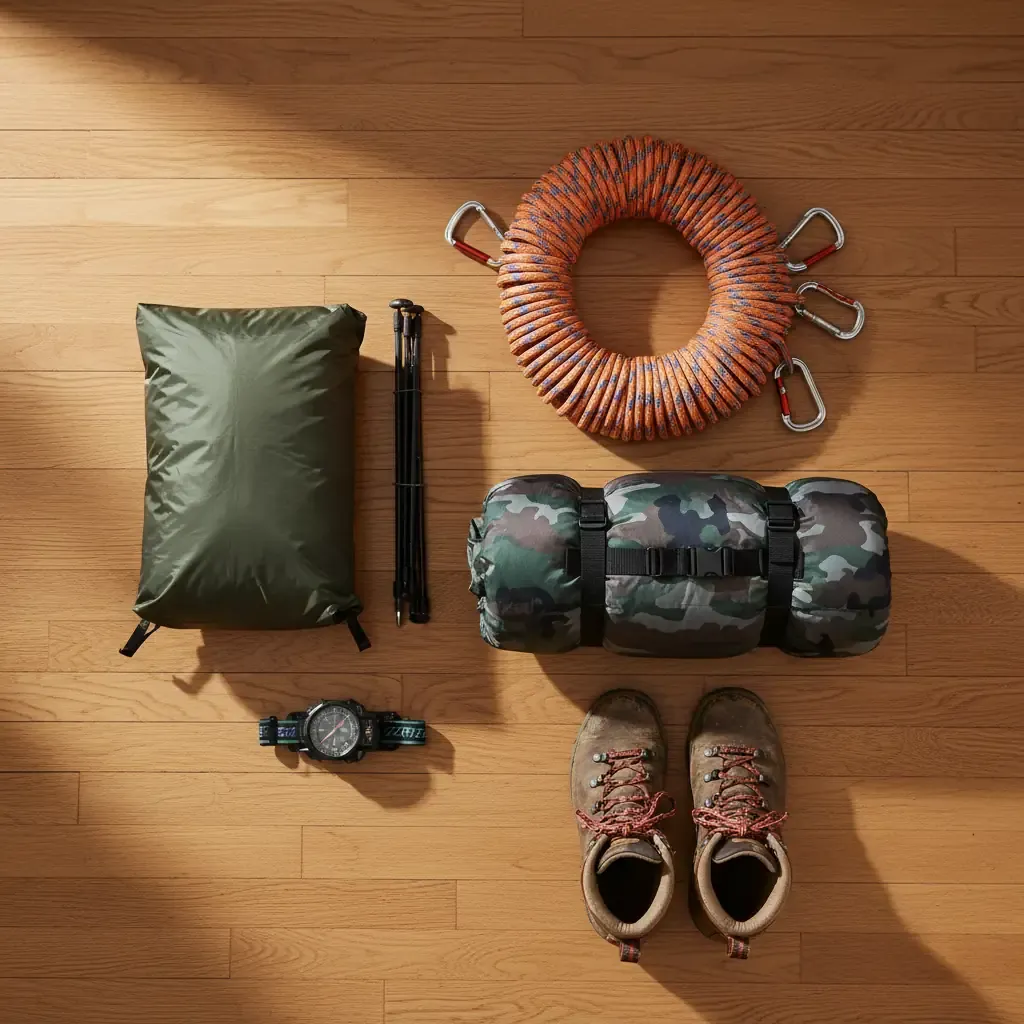
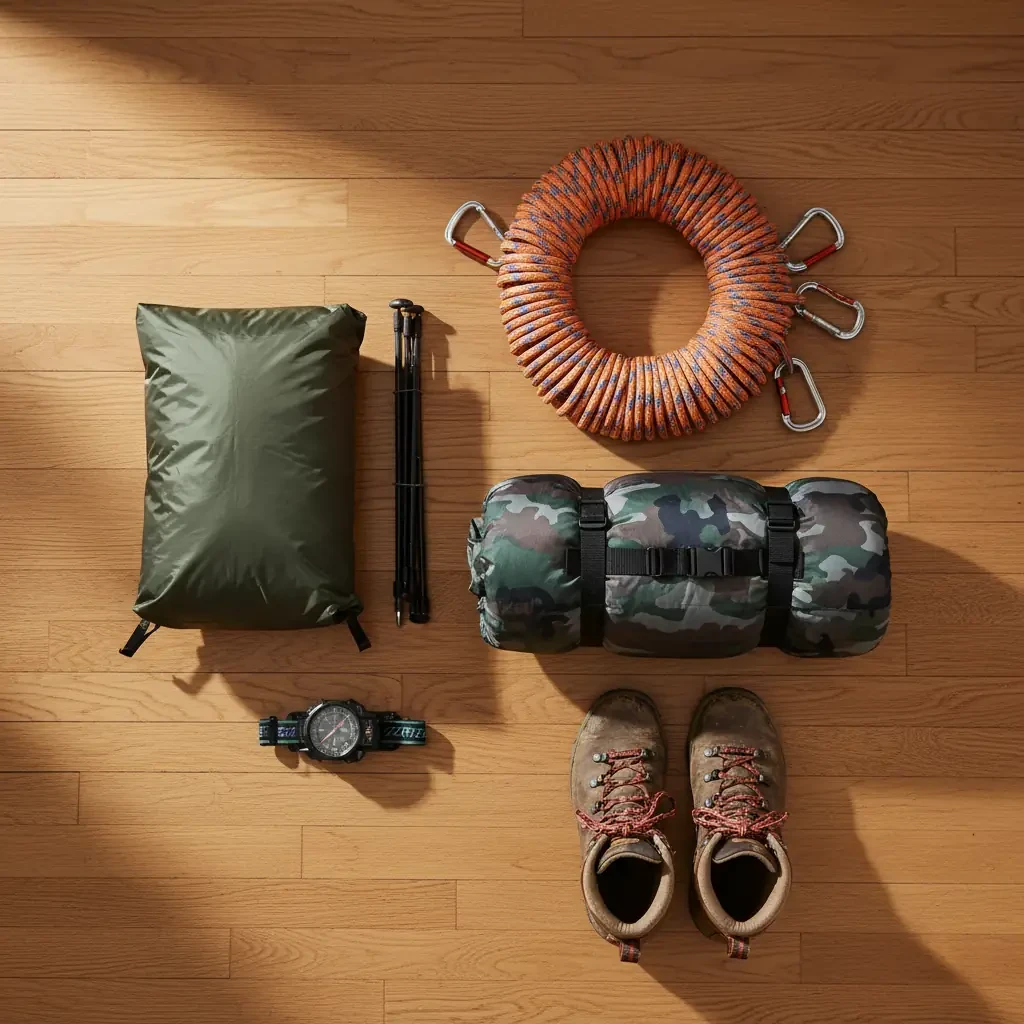
Well-worn hiking boots, a coiled rope, carabiners, and a tent are neatly arranged on a wooden floor in a flat lay view.
The challenge is compounded by the seasonal nature of some sports. Paddleboards might sit untouched from November through February, consuming prime garage space during months when they're not being used. A well-chosen storage unit solves this by giving you a dedicated, secure location for items you cycle in and out throughout the year without sacrificing the space you need at home every day.
What Types of Outdoor Gear Belong in a Storage Unit
Not every piece of gear is the right fit for self storage, but many of the largest and most valuable items are ideal candidates. Here's a breakdown of what works well:
- Kayaks and paddleboards: These are among the most space-consuming items in any outdoor enthusiast's collection. A 10x10 unit can accommodate a full-length kayak laid flat, while a 5x10 unit works well for shorter kayaks or paddleboards stored upright with proper padding to protect the hull.
- Bikes and cycling gear: A storage unit gives road bikes, mountain bikes, and e-bikes a secure home away from weather exposure. Store helmets, pumps, water bottles, and repair kits alongside the bikes so everything is in one place when it's time to ride.
- Camping and hiking equipment: Tents, sleeping bags, folding chairs, coolers, lanterns, and backpacks can fill an entire room at home. Grouping all your camping storage in a single unit makes trip prep far more efficient. Just pull the bins, load the car, and go.
- Seasonal sports equipment: Surfboards, golf bags, baseball gear, and skateboards used only part of the year are perfect for rotating in and out of storage based on the season. This approach keeps your home organized without requiring you to part with gear you genuinely use.
- Smaller seasonal collections: A seasonal gear storage setup in a 5x5 unit works well for compact collections; think a couple of backpacks, a set of trekking poles, and some climbing gear. For larger setups with multiple big-ticket items, a 5x10 or 10x10 unit is a better fit. TNT Self Storage Management offers a range of unit dimensions to match your specific needs, and our storage unit size guide can help you find the right match.
How To Prepare Your Gear Before Moving It Into Storage
Putting gear into storage isn't just about finding a unit and loading it up. A little preparation goes a long way toward keeping your equipment in excellent condition between uses. Follow these steps before moving anything in:
- Clean everything thoroughly. Sand, dirt, salt residue, and organic material left on gear can cause deterioration over time and attract pests. Rinse surfboards and kayaks, wipe down bike frames, and shake out tents and sleeping bags before they go into storage.
- Disassemble where possible. Removing tent poles, bike pedals, and kayak paddles maximizes space efficiency and reduces the risk of bending or breaking components during storage. Flat, compact items are much easier to organize and stack.
- Use protective covers and padding. Surfboards benefit from board bags, bikes from frame wraps, and camera equipment from padded cases. Original packaging is ideal when you still have it. The goal is to shield delicate surfaces from scratches, pressure points, and dust.
- Consider a climate-controlled unit for sensitive gear. Certain materials like rubber gaskets, adhesives used in wetsuits, and electronics in camping setups can degrade when exposed to significant temperature swings. A temperature-regulated unit maintains a consistent range year-round, which is especially valuable during SoCal's summer heat spikes in the Inland Empire and inland Los Angeles County.
- Label all bins and containers clearly. When it's time to grab your camping gear for a weekend in the San Bernardino Mountains, the last thing you want is to dig through unlabeled boxes. A simple labeling system saves time and frustration every single trip.
What To Look for in a Storage Facility for Recreational Equipment
Choosing the right facility is just as important as choosing the right unit size. Recreational equipment represents a real financial investment, and the facility you select should reflect that. Here's what to prioritize:
- Gated access control and digital surveillance: Your bikes, kayaks, and sports equipment deserve serious protection. Look for facilities with keypad-entry gating and cameras covering the property.
- Month-to-month leases: Outdoor enthusiasts' storage needs shift with the seasons. Month-to-month lease terms give you the flexibility to scale up during peak adventure months and scale back when your gear inventory is lighter. Avoid facilities that lock you into long-term contracts without flexibility.
- Drive-up access: Loading a 12-foot kayak or a full set of camping bins is challenging enough without navigating stairs or tight corridors. Drive-up units let you pull your vehicle directly to the unit door, making the process of loading and unloading bulky sports equipment straightforward and efficient. TNT Self Storage Management's facility in Whittier, for example, offers drive-up storage units specifically suited to this kind of loading need.
- Climate-controlled options: In areas like the Inland Empire, where summer temperatures regularly climb well above 100° F, a temperature-controlled unit helps preserve gear materials that would otherwise be stressed by the heat. It's a worthwhile consideration for any gear you store for extended periods.
- Transparent pricing: Ask about all fees upfront, such as administrative fees, insurance requirements, lock fees, and any rate increase policies. A trustworthy facility will walk you through pricing clearly before you sign anything.
TNT Self Storage Management locations in Riverside, Orange County, and Los Angeles County are designed with these priorities in mind, offering secure, well-maintained units with straightforward lease terms and a team ready to help you find the right fit.
Reclaim Your Space and Stay Ready for Every Adventure
Whether you're an avid kayaker exploring SoCal's coastal waterways, a weekend camper heading into the San Bernardino Mountains, or a cyclist riding the trails of Orange County, having a well-organized storage solution keeps you ready without the clutter. The right unit means your gear is protected, easy to find, and waiting for you whenever the next trip comes together.
TNT Self Storage Management operates locations across Southern California that offer secure, well-maintained units in a variety of dimensions, from compact 5x5 units for smaller seasonal collections to larger 10x10 and 10x20 spaces for serious gear hauls. With month-to-month leases, gated access, and drive-up options at select locations, the setup is built around how outdoor enthusiasts actually live and plan.
Getting started is straightforward. Call TNT Self Storage Management today to speak with a team member who can help you identify the right unit size and lease terms for your outdoor lifestyle. Reclaim your garage, free up your living space, and keep all your gear organized and protected in one secure, reliable location, so the only thing standing between you and your next adventure is the drive there.